"карманная ракета" покупалась как авто на каждый день, свозможностью последующих доработок .
Данная модель RS модификации :
— DONC 1.6 B6D 147 hp (110 kW) 16 клапанов (по 4 на цилиндр).
Код двигателя: B6D
Объем двигателя (cc): 1598
Холостой ход (rpm): 800 ±50
Клапанов: 16
Клапанный зазор: Гидравлика
Компрессия: Нормальная (bar) 13.5, Минимально допустимая (bar)9.5
Давление масла (bar/rpm): 2-3/1000
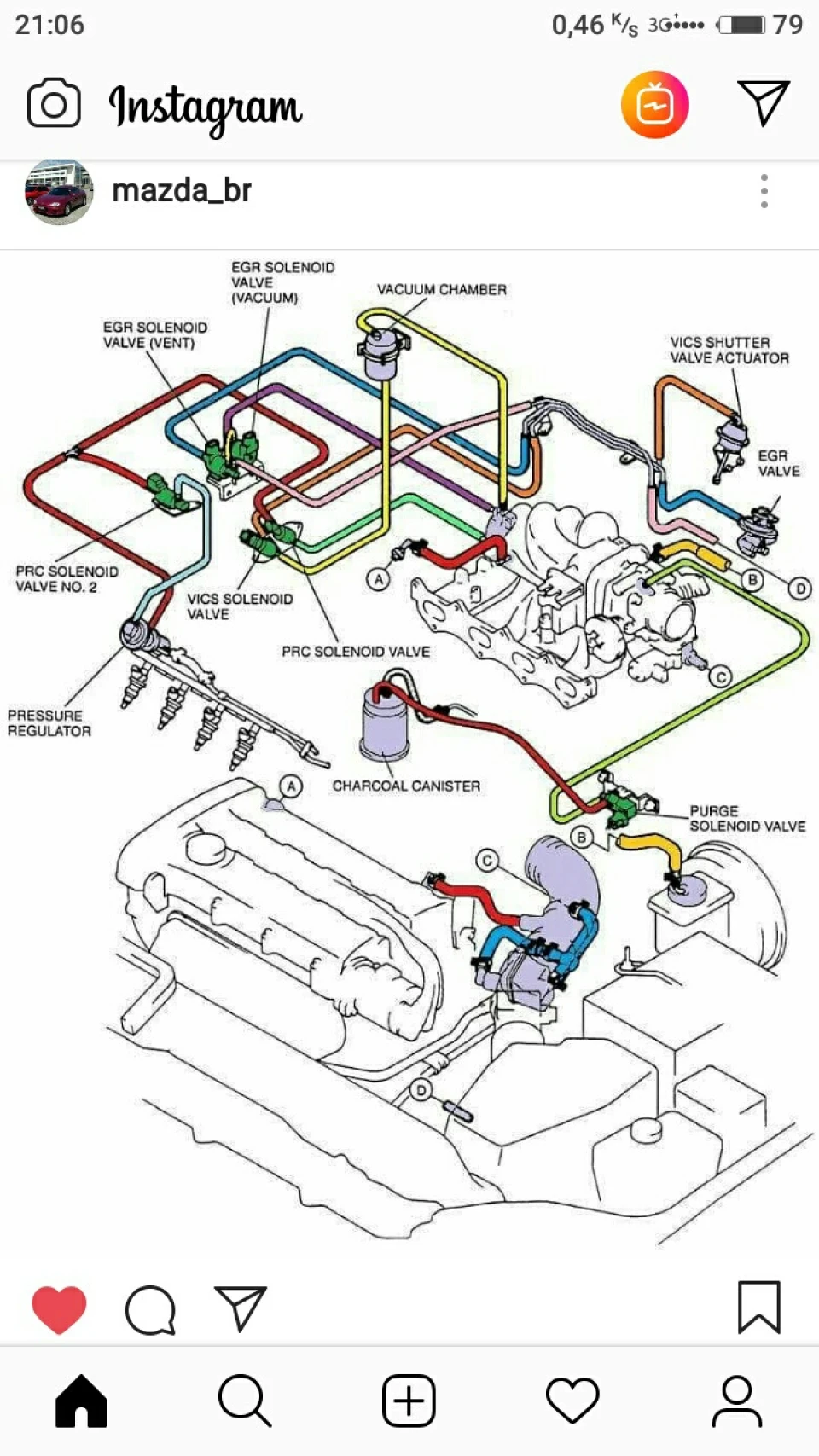
Система впрыска: Mazda EGI
Порядок воспламенения: 1-3-4-2
УОЗ (°/rpm): 10±1/800
Давление топливного насоса: 6.5 (bar)
Давление в топливной системе (bar): 3.3
CO (%): < 0.5
CO2 (%): > 10
HC (ppm): 200
O2 (%): 0.1 — 0.5
Lambda: 0.97 — 1.03
Lambda change (Delta Lambda): 0.03
Температура масла двигателя: 80 °C
Быстрый холостой ход: 3000 (rpm)
CO на быстром ХХ (%): < 0.3
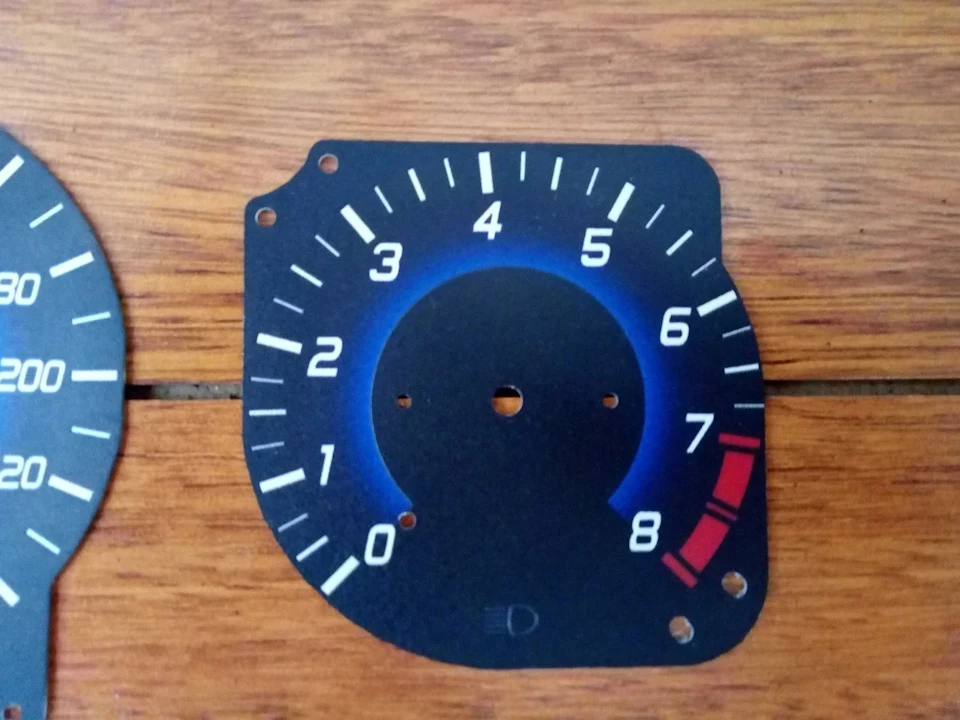
Граничные обороты двигателя (rpm): 7200
— короткоходная механика
— выхлоп Mazdaspeed
— подвеска Mazdaspeed (стойки, пружины, стабилизаторы)
— фильтр нулевого сопротивления в корпусе SCT made in Germany 76мм
— диски литые Borbet T15
— резина Continental ContiEcoContact CP 195-60 R 15
— аккумулятор A-Mega Viking 62 Ач 530 А
— руль Simoni Sport Action
— салон черная кожа, черный Oracal Carbon
Общая информация о Mazda MX-3 :
The Mazda MX-3 is a four-seat Kammback coupé first introduced atthe Geneva Motor Show in March 1991. The MX-3 was marketed as theMazda MX-3 Precidia in Canada, the Eunos 30X in Australia, and asthe Eunos Presso, Autozam AZ-3 and Mazda AZ-3 in Japan.
History
The MX-3's platform is called the EC platform, and shares muchwith the BG platform of the contemporary Familia/323/Protegé. Thefirst model year available for most markets, including NorthAmerica where it went on sale in September 1991, was 1992.Originally available with a single-cam 1.6-liter inline-four or thetwin-cam V6, a few more engines were available as developmentcontinued. In the summer of 1991, the Autozam AZ-3 was added to theJapanese market lineup. It was known by two names; "Autozam" wasmeant to be Mazda's more youthful brand, so it combined a somewhatlower price with a sportier (but smaller) twin-cam four of 1.5liters, and also sold as the Eunos Presso, a companion, affordablesports car to the Eunos Roadster.
The small displacement V6 was offered to comply with Japanesegovernment regulations concerning exterior dimensions and enginedisplacement; Japanese buyers were liable for taxes for vehiclesexceeding the regulations which would affect sales. Japanese buyerswho were willing to pay the tax for larger vehicles were now givena choice of the FC series Mazda RX-7 and the JC series MazdaCosmo.
In January 1994, a DOHC version of the familiar B6 engine, theB6D, replaced the previous version.This provided a useful powerincrease but conversely also made the considerably more expensiveV6 version less desirable. Sales of the V6 in the United Statesmarket came to an end after the 1994 model year, although theycontinued in Canada, Japan and many other export markets. Whilecalled K8-DE in North American specs, Japanese and other marketsreceived an engine called the K8-ZE. Aside from emissions equipmentand varying power claims due to myriad ratings methods, thedifferences are negligible.
Performance[edit]
The V6 MX-3 has a factory claimed top speed of 202 km/h (126 mph)in European trim. The US-spec MX-3 GS can accelerate from 0 to 60mph (97 km/h) in 8.4 seconds, and can travel a quarter mile in 16.4seconds. With a turning rate of 0.89 g (8.7 m/s²), its handlingcapabilities were among the best in its class.
The V6 engine belonged to the Mazda K-series, which were used ina range of Mazda vehicles. These engines use a Variable LengthIntake Manifold (VLIM), in order to provide optimal torque usingintake resonance. Mazda called their system on the MX-3 the"Variable Resonance Induction System" (VRIS). This engine had a7, 000 rpm redline, and a 7, 800 rpm fuel cutoff.
For the rear suspension of the MX-3, Mazda used its proprietaryTwin-Trapezoidal Link (TTL) technology, delivering benefitsassociated with active four-wheel steering systems while lighterand less mechanically complicated. Twin-Trapezoidal Link technologyhas been used on a range of other Mazda vehicles before and sincethe MX-3.
Models and specifications[edit]
RS • 1992-1998 (North America 1991-1996)
GS • 1992-1998 (Canada until 1995, US until 1994)
MX-3 GS
Eunos 30X (Australia)
1.6L B6-ME SOHC 16-valve
Type inline-4
Power 88 hp (66 kW) at 5, 000 rpm
Torque 98 lb·ft (133 N·m) at 4, 000 rpm
Model years 1992-1993
1.6L B6-D DOHC 16-valve
Type inline-4
Power 106 hp (79 kW)
EPA fuel economy (mpg) 1994 5MT: 25 city, 28 combined,
34 highway, average 30.0[5]
Model years 1994-1998
1.8L K8-DE DOHC 24-valve
Type 60° V6[4]
Power 130 hp (97 kW) at 6, 500 rpm
Torque 115 lb·ft (156 N·m) at 4, 500 rpm
0-60 mph 8.5 s
1/4 mile 16.8 s @ 82.5 mph (133 km/h)
Top speed estimated 120 mph (125 mph before 7800 rpm cutout)
Model years 1992-1998
Special editions
In 1993, Mazda Canada offered a limited special edition model ofits Mazda MX-3 GS to celebrate the company's 25th year in Canada.At the same time, Mazda USA offered a similar model to a specialedition as well. Only a total of 2, 000 special edition models weresupposedly made. The special edition MX-3 featured the V6 engine, leather interior (including seats, steering wheel and shift knob), heated seats (Canada only), and custom Enkei manufactured 15 inchalloy wheels. Most special edition models came in the color"raspberry metallic"; however, there was also "blaze" red, "brilliant" black, and "laguna" blue.
In 1993, Mazda Europe produced 100 Mazda MX-3 V6 SEs. These hada leather and suede interior, and all had the clear white bodycolor. There were also a limited number of Mazda MX-3 V6 Equipes, with "sparkle green metallic" or "noble" green exteriors.
A special edition for Portugal MX-3 "van" (back only used fortransport something like boxes, cases…) moved by petrol insteaddiesel as usual
Modifications
Comparison chart of typical MX-3 engine swaps
The MX-3 is becoming a rare car, so modifications for it can bedifficult to find unless one knows where to look, since it has notbeen sold in North America since 1997. Since the MX-3 has twoengine classes, I4 and V6, many of the engine performancemodifications are dependent upon what platform is installed.
There is now a decent range of body modifications for the MX-3along with performance brakes and suspension.Most extensivemodification must be entirely custom fabricated due to limitedavailability.
RS
The MX-3 RS with the four-cylinder engine can upgrade to the BP 132hp (98 kW), B6-T 147 hp (110 kW), BP-T 179 hp (133 kW) and BPD-T206 hp (154 kW) engines.
Swapping of the four-cylinder RS engines is slightly morecomplicated than the V6 GS mainly due to ECU, wiring harness, andMAF combinations as well as motor mounts. The V6 swaps requirespecific ECU, intake manifold, and VAF sensor combinations, butthere are far fewer variables to deal with. Many improvements canbe made after the engine swap and during the engine tuning processto find the best combination of engine peripherals.
GS[edit]
The most common engine swap for MX-3 GS owners with the V6 engineis a 2.5 L V6, either a North American-spec KL-DE 168 hp (125 kW), found most commonly in the 1993-1997 Ford Probe GT, the 1993-1997Mazda MX-6 LS, or the 1993-2002 Mazda 626 LX or ES, and theJapanese-spec KL-ZE 200 hp (149 kW), found in such vehicles as theEfini MS-8, Xedos 9, and Eunos 800. A 2.0 L V6 KF-ZE is alsoavailable, but this swap is quite difficult due to theunavailability of required components. For this reason, thisparticular engine swap is not often attempted. The GS, apart fromthe engine has dual tip exhaust, a tighter steering ratio, fourdisc brakes and front and rear spoiler.
In film
The MX-3 has made several appearances in movies and TV shows, including The Italian Job(twice), Dumb and Dumber, I, Robot (with akit on, parked in an alley), The Fast and the Furious, 2 Fast 2Furious (John Walsh’s MX-3), Analyze That, Cellular, Postal, JohnDoe and Session 9.